
If you’re facing structural problems — foundation cracks, uneven floors, sticking doors — selling your house can feel overwhelming. For many homeowners in Burlington, NJ, foundation issues are often seen as deal‑breakers. But the truth is: you can sell a house with foundation issues — and you can sell it fast.
This guide walks you through what foundation issues really mean, how they affect the value and saleability of your home, and what your options are. You’ll learn how to make the sale process work in your favor, whether you choose to fix the problems, sell as‑is, or work with a cash buyer or investor.
What Are Foundation Issues — and How to Recognize Them
Common Signs of Foundation Problems
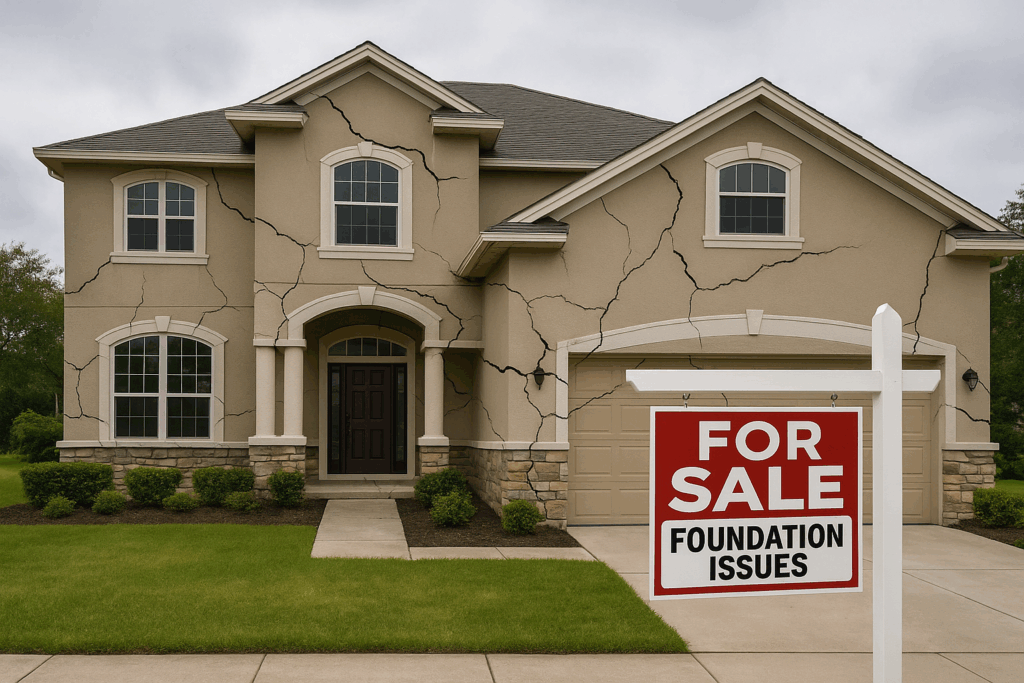
Foundation problems don’t always announce themselves loudly. Sometimes they’re subtle, sometimes dramatic. Recognizing the signs early helps you understand whether you’re dealing with cosmetic cracks or serious structural issues.
Some of the most common indicators include:
- Cracks in walls — can be vertical, horizontal, or diagonal; sometimes around windows or door frames
- Cracks in the floors or foundation slab itself
- Doors or windows that stick, don’t close, or have gaps around frames
- Uneven, sloping or sagging floors — walking through the house and noticing “tilted” rooms or uneven walking surface
- Walls that bow or lean, or appear to be pulling away from ceilings/floors
- Changes around the exterior: gaps between the foundation and doors/garage, deck or porch pulling away, visible foundation shifting or settling
- Water problems, moisture, dampness in basement or crawl spaces — soil moisture changes and drainage issues are frequent causes of foundation movement.
If you’re unsure whether you’re dealing with a serious foundation problem, you can find more detailed information in this foundation repair guide that explains common foundation issues and the best repair methods.
Why Foundation Issues Make Selling Harder (But Not Impossible)
Reduced Buyer Pool & Financing Challenges
A major barrier when selling a home with foundation issues is that many traditional buyers get scared off. They picture hefty repair bills, uncertainty about future issues, or ongoing maintenance headaches.
Even if a buyer is interested, financing can become a problem. Many mortgage lenders — especially those offering conventional or government‑backed loans — may refuse to approve mortgages for homes with significant structural problems. That drastically reduces the number of potential buyers.
Lower Market Value & Price Reductions
Because of the perceived risk and added cost for buyers (repairs, uncertainty, financing trouble), homes with foundation problems often sell at discounted prices compared to similar homes in good condition.
Properties with foundation issues may also linger on the market longer, which can lead to additional stress, holding costs, and uncertainty.
Option 1: Repair the Foundation — Pros, Cons, and Considerations
One route is to repair the foundation (or at least have structural issues professionally assessed and fixed) before listing. This can restore some buyer confidence — but it has trade‑offs.
When Repairing Makes Sense
You might consider repairing if:
- The foundation issue is relatively minor (small cracks, slight settling, moisture issues) rather than a major structural failure.
- You have the financial capacity and time to complete repairs properly.
- You want to maximize sale price and attract traditional homebuyers with financing.
- After repairs, the house will likely pass appraisal and inspection, smoothing lender approvals.
A full inspection by a qualified structural engineer or foundation expert is key before deciding.
The Downside: High Cost, Time, and Uncertain Return
- Foundation repairs — especially major ones — can get expensive, depending on the damage, soil conditions, and work required.
- Even after spending money and time, there’s no guarantee you’ll recoup the full cost in higher sale price. Many buyers will still discount the home because of its history.
- Repairs may delay your sale. If you’re trying to sell fast, this may conflict with your timeline.
Because of these trade‑offs, many sellers decide that repairing isn’t worth it — especially if they need to sell quickly or don’t want to invest more money.
Option 2: Sell As‑Is — Sell “As Is”, Accept Lower Price, But Walk Away Fast
If repairs are impractical or undesirable, selling the house “as-is” is a viable option — especially if you’re open to cash buyers, investors or house flippers.
What Selling “As-Is” Means
- You list the home with full disclosure about foundation issues. You don’t perform any repairs, and buyer accepts the house in its current condition.
- You adjust your expected sale price downward, to reflect the cost and risk the buyer will take (repair cost, time, uncertainty).
- You understand that the buyer pool will likely be narrower — mostly investors, cash‑buyers, or someone willing to take on a project.
Pros of Selling As-Is
- Fast sale: Without the need for repairs, inspections, and contractor scheduling — you can move quickly. Many cash buyers close within weeks.
- No out-of-pocket repair costs: You avoid the financial burden and risk of remodeling or foundation repair.
- Less hassle and lower stress: No dealing with contractors, timelines, or follow-up repairs.
Cons of Selling As-Is
- Lower offer price: Buyers factor in risk and repair costs, so offers are usually significantly below market value for structurally sound homes.
- Limited buyer pool: Many traditional buyers with mortgages avoid properties with foundation issues — limiting options.
- You must disclose issues: Full transparency is legally and ethically required. Trying to hide problems may lead to renegotiation, offers falling through, or even legal trouble.
Option 3: Target Investors, Cash Buyers, or House Flippers — Strategy & What to Expect
Given the constraints above, you might find that selling to an investor, house flipper, or a cash‑buyer is the most practical path — especially if you want speed and simplicity.
Why Investors & Cash Buyers Are Often More Willing
- They’re used to buying properties “as-is,” including houses with structural issues. They often have the funds to close quickly and resources to complete necessary repairs.
- Their business model may involve renovation, resale, or property flipping — meaning they expect to invest in repairs, and factor that into their offer price.
- They accept lower entry prices because their profit relies on improving the home and either reselling or renting it later.
What to Expect in This Route
- Offers often come below 70–80% of the “after repair value” (ARV) of the home — because buyers need to cover repair costs, time, risk.
- Closing tends to be faster, since investors frequently pay cash and don’t rely on traditional financing or long inspection contingencies.
- Negotiations tend to focus on the numbers (repair cost, discount rate) rather than emotional attachments to the home.
Step‑by‑Step: How to Sell Your Burlington, NJ House with Foundation Issues — Fast & Smart
Here’s a roadmap you can follow to streamline the sale process, whether you choose to repair or sell as-is.
| Step | What to Do / Why It Matters |
|---|---|
| 1. Get a Professional Inspection and Structural Assessment | Hire a qualified structural engineer or foundation specialist — to accurately diagnose damage, estimate repair costs, and document structural condition. This helps you market more transparently and realistically. |
| 2. Decide: Repair or Sell As‑Is | Based on inspection findings, cost estimates, your timeline, and financial goals. Evaluate whether repairs will yield enough return or if selling as-is is more practical. |
| 3. Price the Home Realistically | If selling as-is, discount the price to reflect repair costs and risks. If repairing, factor in repair cost and remaining market value. Consider offering repair credits or concessions. |
| 4. Be Transparent — Disclose Known Issues | Full honesty builds trust and helps avoid renegotiation or legal risks. Share inspection reports, repair quotes (if available), and documented foundation issues upfront. |
| 5. Market to the Right Audience | Traditional buyers may be wary — target investors, cash buyers, house flippers, or renovation-loan buyers. Highlight potential, location, and discount for repairs. |
| 6. Present the Property Strategically | Use good photos, emphasize positives (layout, neighborhood, lot, other upgrades), but don’t hide foundation issues. Include repair estimates or range to give clarity to buyers. |
| 7. Negotiate And Close — Expect Lower Offers But Faster Deals | Be ready for lower offers, possibly cash, quick closing, and simpler transactions if dealing with investors. |
Legal & Disclosure Considerations (Especially for NJ Sellers)
When selling a house with foundation issues, it’s critical to handle disclosures properly — not only ethically, but also legally. Sellers in New Jersey are required to complete a property‑condition disclosure statement before a buyer becomes contractually obligated, under the Real Estate Consumer Protection Enhancement Act.
For the official seller disclosure requirements (including how to declare known structural issues, flood, or foundation problems), review the Seller’s Property Condition Disclosure Statement from the New Jersey Division of Consumer Affairs.
This form requires sellers to disclose known material defects — including foundation problems, structural shifts, water damage, and more — regardless of whether the sale is “as‑is.”
Failing to disclose known defects — or misrepresenting the home’s condition — can expose sellers to liability under New Jersey law.
What Buyers Are Looking For — And How to Appeal to Them
When a buyer evaluates a house with foundation issues, they often consider several factors beyond just the purchase price. Understanding what buyers care about helps you market more effectively, and avoid wasted time with unqualified buyers.
- Clarity and transparency: Buyers want to know exactly what they’re getting — give them inspection reports, documentation, photos.
- Cost/reward balance: Buyers want a deal — clearly communicate repair estimates, projected costs, and potential after‑repair value.
- Flexibility and convenience: Investors and cash buyers value speed and simplicity — make the process easy and fast.
- Potential & opportunity: Paint a picture of what the home could be — layout, neighborhood benefits, renovation potential, and investment upside.
- Risk mitigation: Offer repair credits, or be open to negotiation — this reduces perceived risk and increases interest.
When It Might Not Make Sense to Sell — And What to Do Instead
In some cases, selling may not be the best immediate option — especially if:
- The foundation issues are severe and dangerous (e.g. shifting structural load, severe sinking, risk of collapse).
- The cost of repairs is extremely high — high enough that even major price adjustments may not attract buyers.
- You are emotionally or financially unprepared to manage buyer negotiation, repair quotes, or paperwork/inspection risks.
- The local market is weak, or there’s little demand for fixer‑upper properties in your area.
In such scenarios, alternatives include:
- Repair and renovate — make the house safe and structurally sound, then list it properly.
- Hold and maintain until conditions improve (market, funds, etc.) — if the house is livable, occasional maintenance may allow time to plan repairs or improvements.
- Consult professionals — structural engineers, real estate agents familiar with distressed properties, or contractors — to evaluate real cost-benefit.
Frequently Asked Questions (FAQs)
Q1: Can I sell my house with foundation issues if I don’t fix it?
Yes — It’s possible to sell the property “as-is,” especially to cash buyers or investors who are used to handling renovations. What’s important is honesty and realistic pricing.
Q2: Will foundation issues lower the value of my home, even if I disclose them?
Almost certainly — Homes with structural problems typically fetch less than similar houses in good condition, because buyers factor in costs, risk, and inconvenience.
Q3: Can I get a mortgage on a home with foundation issues?
Many lenders — especially those offering conventional or government‑backed loans — are reluctant to approve mortgages for homes with foundation or structural problems. That means many buyers relying on loans may walk away.
Q4: How fast can I sell a house with foundation issues?
If you sell to a cash buyer or investor, and market correctly, the sale can close in a few days to a few weeks, depending on negotiations and paperwork.
Q5: Should I get a structural inspection before selling?
Absolutely. A professional inspection or engineering assessment helps you understand the severity of the issue, estimate repair costs realistically, and market the property transparently — which increases trust and avoids surprises.
Why Selling for Cash or Working with an Investor Might Be Your Best Bet in Burlington, NJ
Given all the challenges — reduced buyer pool, financing issues, repair costs — working with an investor or cash buyer is often the path of least resistance. Here’s why this route tends to make sense:
- Investors expect to rehabilitate homes — so structural issues don’t scare them as much, they price accordingly.
- Cash buyers don’t need mortgage approval or structural compliance — they can close fast.
- You save time, money, and the stress of overseeing repairs, dealing with contractors, or waiting months for a sale.
- Even though the sale price may be lower, you trade that for convenience, speed, and certainty — which for many sellers is worth it.
In short: if speed, simplicity, and avoiding additional investments matter most, selling to an investor or cash buyer — “as-is” — often makes sense.
Conclusion — It’s Not Impossible, Just Strategic
Having foundation issues doesn’t doom your chances of selling — but it does mean you need to be realistic, transparent, and strategic. Whether you repair or sell as-is, the key is honesty, correct pricing, and targeting the right buyers.
For homeowners in Burlington, NJ, a property with foundation problems can still sell — and often faster than you expect — if you approach the sale with the right plan. At 613 Home Buyers, we specialize in helping homeowners sell their properties quickly and hassle-free, even with foundation issues. Understanding the damage, setting realistic expectations, and marketing to investors or cash buyers can get the job done, without the stress of repairs or a long listing process.
If you’re ready to sell your house fast, 613 Home Buyers is here to make the process easy and straightforward. Contact us today to get a fair cash offer and close on your timeline!
